A truly beautiful film which came out in 2003, directed by
Gary Ross, (Big, Pleasantville and The Hunger Games) which none of my students saw, apparently "because it was about a horse", was based on a book by Laurie Hidebrand which was primarily shot listed rather than storyboarded is called:
This film doesn't have loads of explosions or laser gun battles, it doesn't feature women in tight spandex trying to save the galaxy or giant robots in a fight to the death and that may explain why few people I know saw it. But, despite the slow pace and basically the same cast that was in Pleasantville, it is a well crafted, expertly designed and shot film and worth a watch- even if you're not a Tobey Maquire fan. I really liked how the film is edited and what the directer and cinematographer John Schwartzman did with the camera(s). Each shot carries an attention to hierarchy of character and conveys an great sense of story. I also really like movies that portray a relatively accurate historical essence.
My favorite scene(s) take place toward the beginning of the film before the introduction of the "main" character, Seabiscuit - the horse. The scene opens with Charles Howard, a wealthy business man who built his fortune on sel
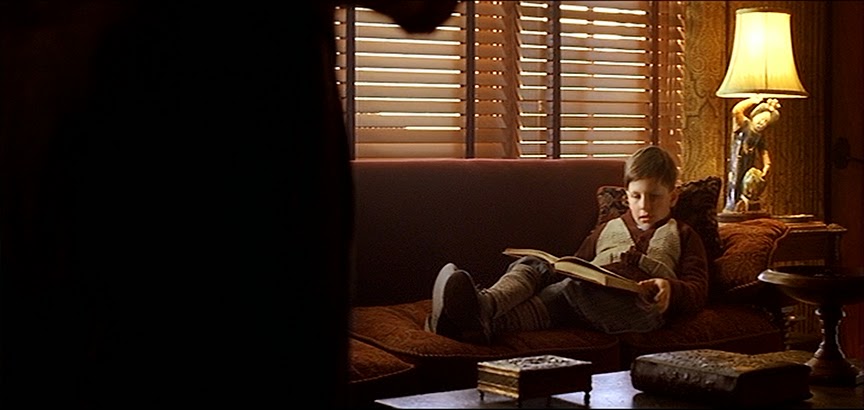
ling automobiles is talking to an associate on the phone about how bad things are getting due to the stock market crash of 1929. Charles stands in his "castle" but the shot is set at a POV other than his own. After careful observation, the room is seen through the eyes of Charles' son Frankie.
Cut to an MS of Charles. He is full of worry and speaks into the phone but looks toward the camera, his son;
No. No, Bill.
I'm not gonna do it.
No more layoffs.
Well,
it can't get any worse.
He casts a glance at his son.
And cut to Charles' POV of Frankie.
Cut back to Charles.
Look,
if it stays like this, we'll just--
Bill,
we'll be fine, really.
We will.
All
right. l'll see you in town.
The Audience knows what he says is a lie because of the way the cabinet obscures his face. It's also nice bit of foreshadowing considering he's looking at his son. "We'll be fine..."
Charles moves to walk out of shot.
Cut to an up angle (Frankie's POV) on Charles. Note how Charles looks off the right slightly and above camera. Even though it's an up shot, Charles doesn't feel like he is possessing the weight of the shot, merely passing through it. He is troubled and worried.
Frankie, come on.
It's a glorious day outside.
Cut to an ERL on Frankie as his dad stands in OTS to the left. The camera position gives Frankie ownership of this scene. Frankie is his dad's whole world, the man would do anything for his son and this shot drives that point home. Charles asks:
Why don't-- Why don't you go fishing or something?
Frankie answers,
I'm reading.
Cut back to Charles still in up shot but staged to the left of frame. With everything falling apart with his work, he hopes to gain control of just one thing in his life at this point and says:
You can read when it's raining.
Come on. I'll teach you to drive the truck.
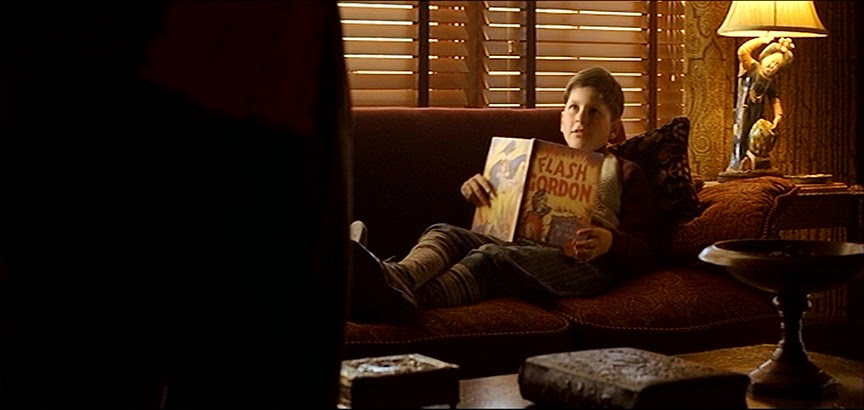
Cut to centered Frontal ERL of Frankie. Frankie, without a doubt, has dad wrapped around his finger.
You already taught me how to drive the truck.
Cut back to Charles.
Well,
what are you reading?
Cut back to Frankie, camera still on his ERL.
Flash Gordon.
Cut to CU Charles, still at left of frame as he sighs.
Cut to CU Frontal of Frankie (his ERL).
Come on, Dad. It's about the future!
Back to dad, he scoffs. He has lost this battle too.
Cut to Ext. shot of the car being loaded and the trunk closing.
Charles and his wife are going back to San Francisco and leaving Frankie to stay at their house.
Charles tells Sam how long they will be gone.
Meanwhile, Frankie lies on his bed, reading, as he can hear his dad speaking outside.
Frankie gets up and looks out the window.
Cut to Frankie's POV as he looks out the window. He watches as his parents get in the car.
Cut to a really interesting double framed composition of Frankie basically from Charles' POV.
Cut back to Frankie's POV as his dad waves and drives off.
Frankie watches the car go.
The music builds and starts a montage of insert shots. We see Frankie's feet stand precariously on a box.
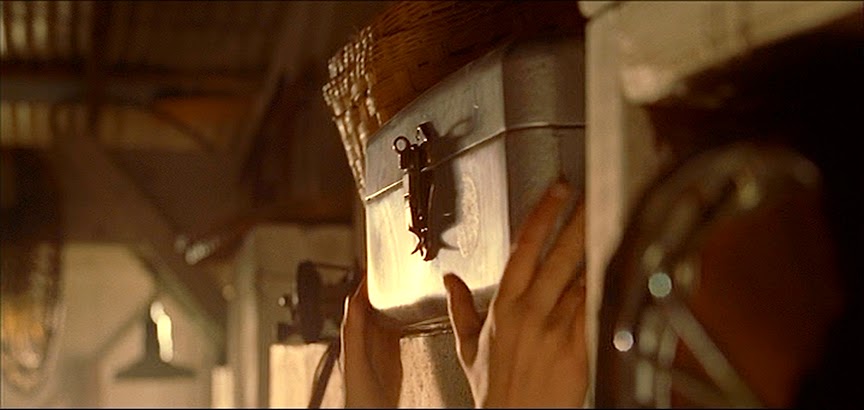
Hands reach from out of shot and lift a tackle box.
In another insert, we see a hand gingerly grab a fishing reel.
A hand places a sandwich in the tackle box.
The box gets pushed on the seat of a car...or truck...
Another insert shows the key turning in the ignition.
A truck engine bangs to life, sending a flock of birds into the air...uh oh, Frankie is going to tack the truck out and go fishing. The birds cawing are bad sign.
More inserts reveal the difficulty Frankie is having putting the truck in gear.
A long shot reveals the truck careening up the hill. Frankie hasn't yet mastered driving the truck.
Cut to Frankie barely able to see over the steering wheel.
The truck continues unsteadily up the hill.
Frankie looks forward to being able to go fishing alone. The size of the wheel emphasizing the danger of the situation.
Long shot, the truck continues upward but another, larger truck is headed down.
Up shot on Frankie, he has to take his off the road to shift gears.
The truck continues up the hill...
The other, down...
RING RING! Cut to a phone.
Cut to a great shot of Charles answering the phone as seen through the windows of a car.
Hello, What?
What makes the shot great is the staging; the very thing that made Charles' fortune is the same thing that brought his son's demise.
Cut to more inserts which show the aftermath of the accident.
Popcorn floats in the cabin of teh truck as it sits on its side.
The wheel spins awkwardly framing a smashed windshield and broken head light.
Cut to Charles speeding home in his car.
He runs to the house...
And is seen in this insert crying, holding the limp body of his son. The sound gets pulled out here and the white object and blurred plant leaf suggest a barrier between the action and the audience. This is now a private moment of grief.
Cut to long shot of a beautifully composed image of the funeral. The sound is pulled almost completely, this is a very sad and private moment for the Howard family.
A little later in this scene, we see the Howard's car being loaded very much the same as what we saw earlier when Frankie watched his parents leave.
Only now, Annie, Charles' grieving wife is being driven alone away from the Howard estate.
We see Charles look through Frankie's window in a throw back to Frankie watching from his room.
The same window frames Charles as he watches Annie leave.
She drives off...
...leaving Charles alone.
You can watch the scene
here, it's pretty amazing! Inserts can be your friend! Thanks for stopping by.